
AI Governance: Building Smarter, More Accountable Government
Artificial intelligence is transforming industries, economies, and public institutions worldwide. Yet many government systems continue to rely on outdated processes that struggle to keep pace with modern challenges. AI Governance provides a framework for transparency, accountability, and evidence-based decision-making that helps government deliver better outcomes for citizens.
AI Governance Creates the Foundation for Responsible Innovation
As artificial intelligence becomes increasingly integrated into government operations, leaders need clear frameworks that ensure technology remains transparent, accountable, secure, and aligned with the public interest.
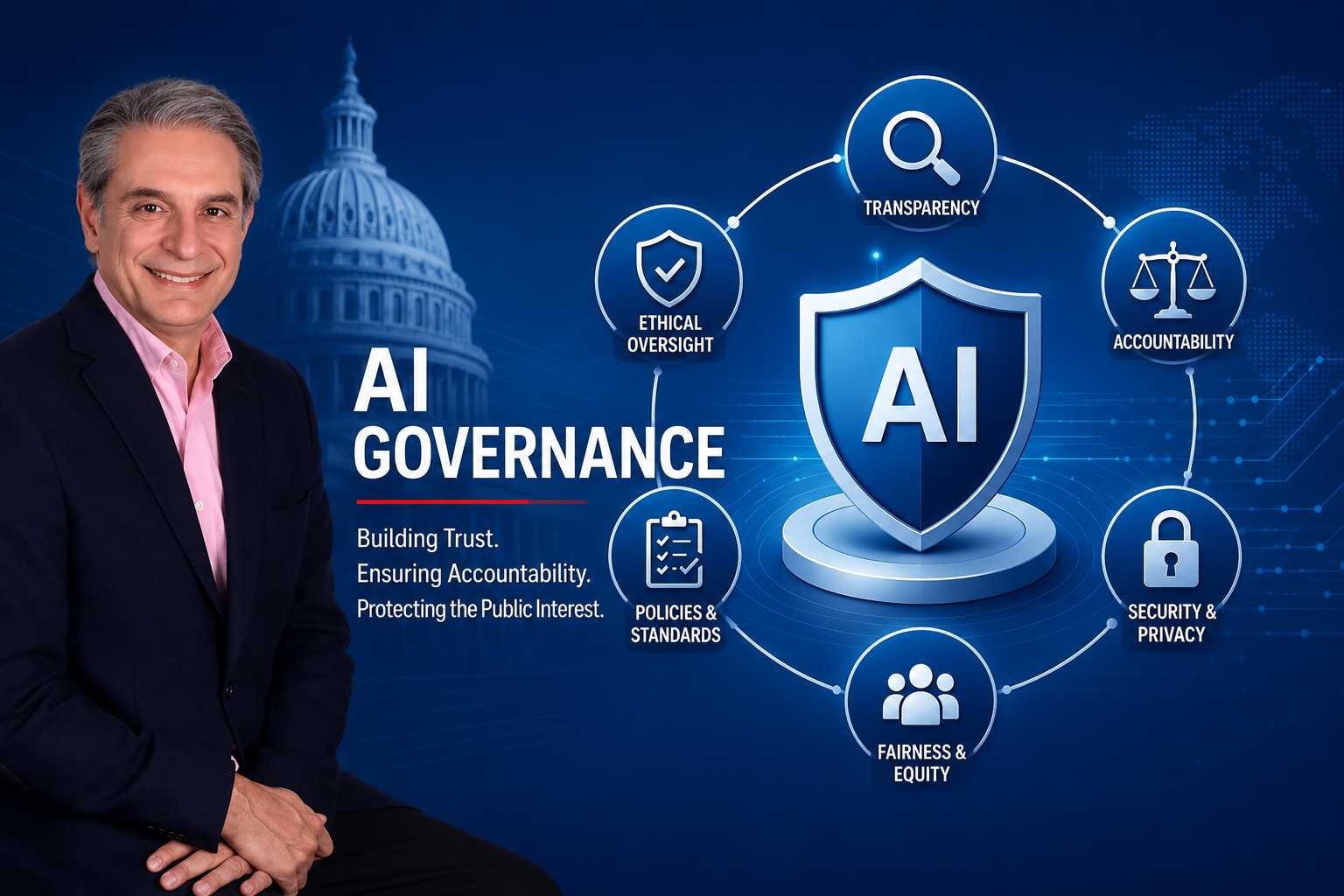
Transparency
Clear oversight into how AI supports government decisions and public services.
Accountability
Ensuring institutions remain responsible for outcomes and performance.
Trust
Building public confidence through ethical and secure implementation.
Governments Need Better Tools to Solve Modern Challenges
Public institutions are under increasing pressure to deliver better services, improve efficiency, protect sensitive information, and respond to rapidly changing economic and technological conditions. Traditional systems often struggle to keep pace.
AI Governance provides a framework that helps governments use technology responsibly while maintaining transparency, accountability, and public trustpublic trust. It enables leaders to make decisions based on evidence, not assumptions.
Better Decision-Making
AI-powered insights help policymakers evaluate options using real-time data and measurable outcomes.
Greater Accountability
Transparent reporting and performance monitoring improve trust between government and citizens.
Faster Public Services
Modern technologies streamline operations and help agencies respond more effectively.
A Modern Framework for AI Governance
Effective AI Governance is not about replacing democratic institutions. It is about using technology to improve transparency, accountability, and decision-making. The Decision Advantage framework combines human leadership with modern technology to help governments deliver measurable results.
Democracy Sets the Goals
Citizens and elected leaders establish priorities, objectives, and public policy goals.
AI Verifies Results
Artificial intelligence helps evaluate performance, identify patterns, and measure outcomes objectively.
Technology Creates Transparency
Modern digital systems provide greater visibility into how policies perform and where improvements are needed.
Citizens Benefit from Outcomes
Government success should be measured by the value it creates for citizens, communities, and businesses.
Building Governments That Can Adapt, Learn, and Deliver Results
Artificial intelligence is creating new opportunities for governments to improve services, strengthen accountability, and make better decisions. The challenge is ensuring innovation advances alongside transparency, security, and democratic oversight.
The most effective governments of the future will not simply digitize existing processes. They will use technology to continuously improve how policies are designed, implemented, and measured.
Smarter Decisions
Data-driven insights help policymakers evaluate outcomes and make informed decisions faster.
Real-Time Accountability
Continuous monitoring improves transparency and helps governments respond proactively.
Citizen-Centered Services
AI can improve service delivery while keeping citizens at the center of public policy.
Government at the Speed of Technology
The future of AI Governance is not about replacing people with algorithms. It is about giving institutions better tools to solve complex challenges, improve public trust, and deliver measurable outcomes. Governments that embrace responsible innovation today will be better positioned to serve citizens tomorrow.
Core Principles of Effective AI Governance
Successful AI Governance requires more than technology. It requires clear standards that ensure artificial intelligence remains transparent, accountable, secure, and aligned with the public interest.
Transparency
Citizens should understand how AI systems support government decisions and how outcomes are measured.
Accountability
Public institutions must remain responsible for decisions, outcomes, and the proper use of AI technologies.
Human Oversight
Artificial intelligence should support decision-making while preserving human judgment and democratic control.
Privacy & Security
Strong data protection, cybersecurity standards, and ethical safeguards are essential for public trust.
Common Questions About AI Governance
AI Governance helps organizations and governments ensure artificial intelligence remains transparent, accountable, secure, and aligned with the public interest. Here are answers to some of the most frequently asked questions.
AI Governance refers to the policies, standards, and oversight mechanisms that guide how artificial intelligence is developed, deployed, and managed. Its purpose is to ensure AI systems remain transparent, accountable, secure, and aligned with public interests.
AI Governance helps governments and organizations use artificial intelligence responsibly while maintaining public trust. It ensures technology supports better decision-making without compromising transparency, privacy, or accountability.
No. Effective AI Governance ensures that artificial intelligence supports human decision-making rather than replacing it. Human oversight remains essential for accountability and democratic governance.
AI can help governments streamline operations, improve service delivery, identify inefficiencies, enhance cybersecurity, and provide better insights for policy development and resource allocation.
Explore Related Policy Priorities
Government Modernization is part of a broader vision for creating more effective, transparent, and innovative public institutions. Explore related policy priorities below.
AI Governance
Learn how governance frameworks help ensure artificial intelligence remains transparent, accountable, and aligned with public interests.
Learn More →AI Policy
Discover how responsible AI policy can support innovation, transparency, accountability, and economic growth.
Learn More →AI in Government
Explore how artificial intelligence can improve public services, decision-making, and operational efficiency.
Learn More →Social Security Modernization
Explore innovative approaches to strengthening retirement security in a rapidly changing economy.
Learn More →