
AI Policy: Creating Rules for Innovation, Trust, and Accountability
Artificial intelligence is transforming industries, economies, and public institutions worldwide. Effective AI Policy provides the framework needed to encourage innovation while protecting privacy, strengthening transparency, and ensuring technology is developed and deployed responsibly. By establishing clear standards and accountability, AI Policy helps build public trust while supporting technological progress.
What Is AI Policy?
AI Policy refers to the laws, regulations, guidelines, and governance frameworks that shape how artificial intelligence is developed, deployed, and used. As AI becomes increasingly integrated into business, government, healthcare, education, and public services, clear policies help ensure innovation remains responsible, transparent, and aligned with societal values.
Effective Policy balances innovation with accountability. It creates guardrails that encourage technological advancement while addressing issues such as privacy, security, transparency, bias, and public trust.
Innovation
Policies that encourage responsible development help organizations innovate with confidence.
Trust
Clear standards increase public confidence in how AI systems are developed and used.
Transparency
Effective oversight ensures AI decision-making remains understandable and accountable.
Security
Modern AI Policy helps protect citizens, businesses, and institutions from emerging risks.
Building Trust in an AI-Driven Future
Artificial intelligence has the potential to transform industries, improve public services, and drive economic growth. Effective AI Policy ensures innovation moves forward responsibly while protecting citizens, businesses, and institutions.
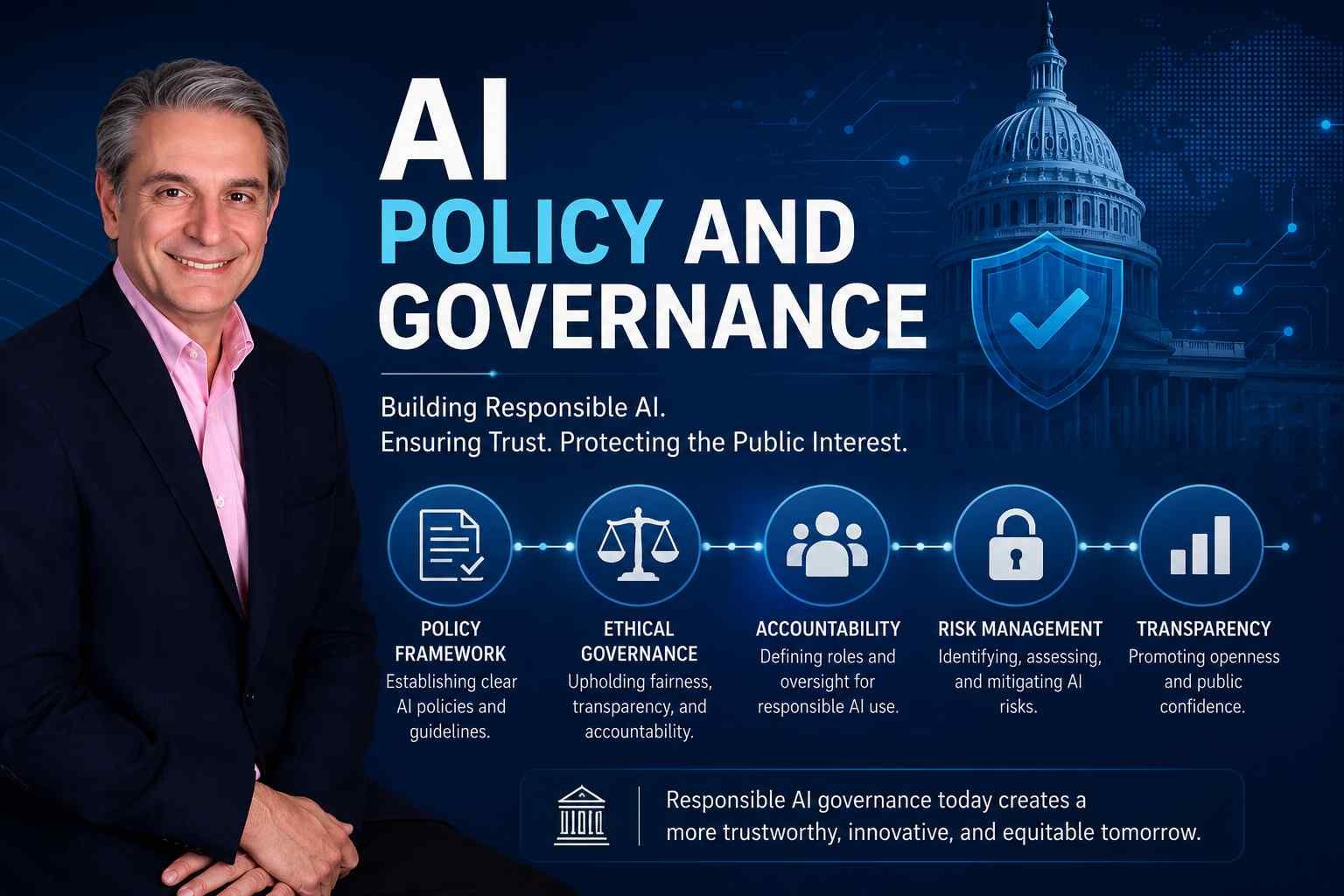
Encourages Innovation
Clear policies create certainty for businesses, researchers, and entrepreneurs developing AI solutions.
Protects Privacy
Responsible frameworks help ensure personal data is handled securely and ethically.
Promotes Transparency
Citizens deserve visibility into how AI systems influence decisions that affect their lives.
Strengthens Trust
Accountability and oversight help build confidence in emerging technologies.
The Challenge Is Not Choosing Between Innovation and Oversight
The future of artificial intelligence depends on finding the right balance. Policies that are too restrictive can slow innovation, while a lack of oversight can create risks related to privacy, security, transparency, and public trust.
Effective Policy creates a framework where innovation can thrive while ensuring accountability, ethical standards, and protections for citizens. The goal is to enable progress without compromising trust.
Innovation
Support research, entrepreneurship, and technological advancement.
Responsibility
Ensure AI systems are developed ethically and transparently.
Accountability
Establish clear oversight and measurable outcomes.
Public Trust
Create confidence that AI is being used responsibly and effectively.
Key Pillars of Effective AI Policy
Strong AI Policy provides a foundation for innovation while ensuring artificial intelligence remains transparent, accountable, secure, and aligned with public interests.
Ethical AI
Promote fairness, reduce bias, and ensure AI systems respect human rights and democratic values.
Transparency
Provide clear visibility into how AI systems are developed, deployed, and used in decision-making.
Privacy & Security
Protect personal information and strengthen safeguards against cyber threats and misuse.
Human Oversight
Ensure people remain accountable for decisions while using AI as a tool to support outcomes.
Where AI Policy Makes the Greatest Impact
Effective AI Policy influences every sector where artificial intelligence affects decision-making, public trust, and economic growth. Strong frameworks help ensure innovation remains responsible while delivering meaningful benefits.
Government
Supporting transparency, accountability, and responsible public sector innovation.
Healthcare
Protecting patient privacy while enabling AI-powered diagnostics and care delivery.
Education
Encouraging innovation while ensuring fairness and equal access to opportunities.
Business & Industry
Creating clear standards that help organizations adopt AI responsibly and confidently.
Responsible Innovation Requires Clear Rules
AI Policy is not about slowing progress. It is about creating the confidence, trust, and accountability needed for innovation to thrive. The strongest economies and institutions will be those that successfully balance technological advancement with responsible governance.
The Future of AI Policy Will Shape the Future of Innovation
Artificial intelligence is evolving faster than any technology in modern history. The decisions policymakers make today will influence how AI impacts economic growth, public services, national security, education, healthcare, and society as a whole.
Effective AI Policy is not about limiting innovation. It is about creating clear rules that encourage responsible development, strengthen public trust, and ensure technology continues to serve people and communities.
The goal of AI Policy is not to control innovation—it is to create the trust and accountability needed for innovation to thrive.
Responsible Innovation
Encouraging breakthroughs while establishing clear ethical standards.
Public Trust
Building confidence through transparency, oversight, and accountability.
Global Competitiveness
Ensuring innovation ecosystems remain strong in a rapidly changing world.
Common Questions About AI Policy
As artificial intelligence continues to evolve, policymakers, businesses, and citizens are asking important questions about regulation, innovation, and responsible development.
AI Policy refers to the laws, regulations, guidelines, and governance frameworks that guide how artificial intelligence is developed, deployed, and used responsibly.
Effective AI Policy helps balance innovation with accountability by addressing issues such as transparency, privacy, security, fairness, and public trust.
Well-designed policies support innovation by creating clear standards and reducing uncertainty for organizations developing AI technologies.
AI Policy establishes rules for data collection, usage, storage, and security, helping protect personal information while enabling responsible innovation.
Transparency helps citizens and organizations understand how AI systems work, how decisions are made, and who remains accountable for outcomes.
Explore Related Policy Priorities
AI Policy is one part of a broader vision for modernizing government, strengthening public services, and preparing America for the future. Explore related priorities below.
AI Governance
Learn how governance frameworks help ensure artificial intelligence remains transparent, accountable, and aligned with public interests.
Learn More →AI in Government
Explore how artificial intelligence can improve decision-making, efficiency, and public service delivery.
Learn More →Government Modernization
Discover strategies for creating a more responsive, efficient, and technology-enabled government.
Learn More →Social Security Modernization
Explore innovative approaches to strengthening retirement security in a changing economy.
Learn More →