
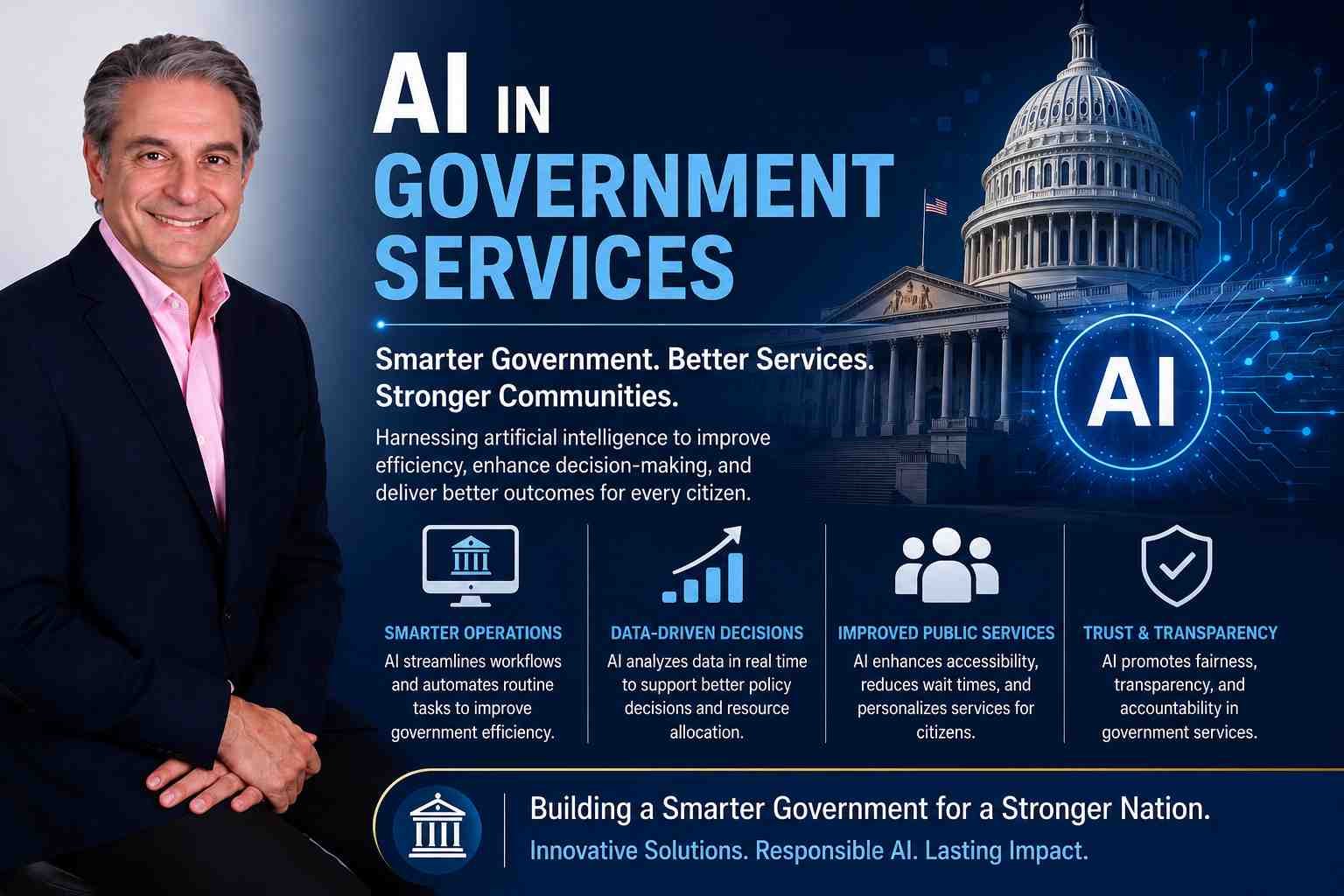
AI in Government: Improving Public Services Through Innovation and Intelligence
Artificial intelligence is transforming how governments operate, deliver services, and respond to citizen needs. From improving decision-making to streamlining operations, AI can help create a more efficient, transparent, and responsive public sector while maintaining accountability and public trust.
What Is AI in Government?
AI in Government refers to the use of artificial intelligence technologies to improve public services, support decision-making, enhance operational efficiency, and strengthen government performance. By leveraging data, automation, and advanced analytics, governments can respond more effectively to citizen needs while improving transparency and accountability.
From processing applications and improving service delivery to supporting policy development and resource allocation, AI has the potential to transform how public institutions operate in the digital age.
Faster Services
Reduce processing times and improve citizen experiences through intelligent automation.
Smarter Decisions
Use real-time insights and predictive analytics to improve outcomes.
Greater Efficiency
Automate repetitive tasks and optimize resource allocation.
Improved Transparency
Enhance accountability through better reporting and performance tracking.
How AI Improves Public Services
Artificial intelligence helps government transform large volumes of information into actionable insights. By improving decision-making and automating routine processes, AI enables public institutions to deliver better outcomes for citizens.
Data Collection
Gather information from government systems, public records, and service interactions.
Analysis
AI identifies patterns, trends, and opportunities that may not be immediately visible.
Decision Support
Insights help policymakers and agencies make more informed decisions.
Better Outcomes
Citizens benefit from faster services, improved efficiency, and better experiences.
Key Applications of AI in Government
Artificial intelligence is helping governments improve service delivery, strengthen decision-making, and create more responsive public institutions. These applications represent some of the most impactful opportunities for responsible AI adoption across the public sector.
Citizen Services
AI-powered assistants and digital platforms help citizens access information, complete applications, and receive support more efficiently.
Fraud Detection
Advanced analytics help identify suspicious activity and protect public resources from waste, fraud, and abuse.
Healthcare
AI supports population health initiatives, resource planning, and improved healthcare service delivery.
Transportation
Intelligent systems improve traffic management, infrastructure planning, and public transit operations.
Public Safety
Predictive analytics support emergency preparedness, disaster response, and community safety initiatives.
Resource Planning
AI-driven forecasting helps governments allocate budgets, manage workforces, and improve long-term planning.
The Path to Better Government Outcomes
When implemented responsibly, artificial intelligence helps governments create a cycle of continuous improvement that benefits both institutions and citizens.
Efficiency
Automate routine tasks and improve operational performance.
Better Decisions
Use real-time insights and analytics to support policy development.
Transparency
Improve accountability through measurable outcomes.
Citizen Experience
Deliver faster, more accessible public services.
Public Trust
Build confidence through responsible and ethical AI use.
How AI Is Transforming Government Operations
Governments are increasingly leveraging artificial intelligence to improve public services, strengthen operational efficiency, and deliver better outcomes for citizens. These examples illustrate where responsible AI can create meaningful impact.
Citizen Support Services
AI-powered virtual assistants help citizens access information, complete applications, and receive support faster while reducing administrative burdens.
Fraud & Risk Detection
Advanced analytics help agencies identify unusual patterns, reduce waste, and improve oversight of public resources.
Healthcare Planning
AI supports resource allocation, population health analysis, and improved healthcare service delivery across communities.
Infrastructure Management
Predictive insights help governments prioritize maintenance, optimize investments, and improve long-term planning.
The Future of AI in Government
Artificial intelligence has the potential to fundamentally reshape how governments serve citizens, allocate resources, and respond to emerging challenges. The next generation of public service will be more intelligent, data-driven, and responsive than ever before.
Success will depend on balancing innovation with transparency, accountability, security, and public trust. Governments that embrace responsible AI adoption today will be better positioned to deliver faster services, improve decision-making, and create stronger outcomes for future generations.
The future of government is not simply digital. It is intelligent, responsive, transparent, and citizen-focused.
Human-Centered AI
Technology should enhance public services while keeping people at the center of decision-making.
Responsible Innovation
AI adoption must be guided by governance, accountability, and ethical oversight.
Better Public Outcomes
The ultimate goal of AI is to create more efficient institutions and stronger citizen experiences.
Common Questions About AI in Government
As governments explore artificial intelligence, many questions arise about implementation, transparency, accountability, and the impact on public services.
AI in Government refers to the use of artificial intelligence technologies to improve public services, support decision-making, enhance operational efficiency, and strengthen government performance.
AI can automate routine tasks, improve citizen support, analyze large datasets, and help agencies deliver services more efficiently and effectively.
AI is designed to assist government employees by automating repetitive tasks and providing decision-support tools, allowing staff to focus on higher-value responsibilities.
AI Governance helps ensure AI systems remain transparent, accountable, secure, and aligned with ethical and public policy objectives.
Yes. AI can help governments analyze performance data, improve reporting, identify inefficiencies, and provide greater visibility into public sector operations.
Explore Related Policy Priorities
AI Governance is one part of a broader vision for modernizing government, improving public services, and preparing America for the future. Explore related policy areas below.
AI Policy
Discover how responsible AI policy can support innovation, transparency, accountability, and economic growth.
Learn More →AI in Government
Explore how artificial intelligence can improve public services, decision-making, and operational efficiency.
Learn More →Government Modernization
Learn how technology and innovation can help government operate more effectively and deliver better outcomes.
Learn More →Social Security Modernization
Explore innovative approaches to strengthening retirement security in a rapidly changing economy.
Learn More →