
Government Modernization: Building a Faster, Smarter, and More Responsive Public Sector
Citizens expect government services to be as efficient, accessible, and responsive as the technology they use every day. Government Modernization focuses on improving public services, streamlining operations, and leveraging innovation to create a more effective government that delivers better outcomes for everyone.
What Is Government Modernization?
Government Modernization is the process of improving how public institutions operate, deliver services, and respond to citizen needs. It involves updating systems, adopting innovative technologies, reducing inefficiencies, and creating more responsive government services that meet the expectations of a digital world.
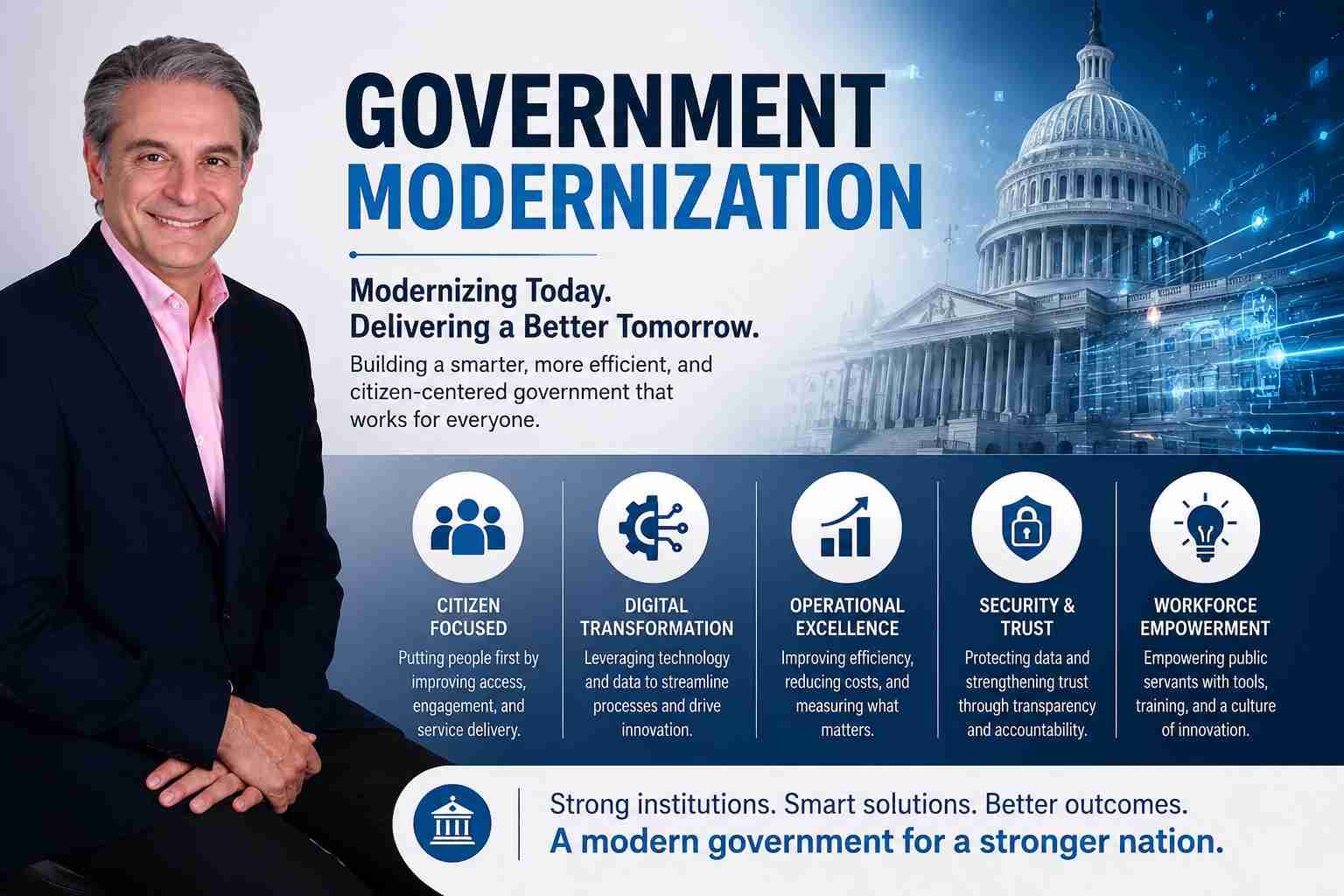
Digital Services
Make government services faster, easier to access, and available whenever citizens need them.
Operational Efficiency
Reduce bureaucracy and streamline processes to improve performance and outcomes.
Data-Driven Decisions
Use technology and analytics to improve policy development and public service delivery.
Citizens Expect Government to Operate at the Speed of Modern Life
People manage their finances, healthcare, education, and communication through digital platforms every day. They increasingly expect the same convenience, accessibility, and responsiveness from government services.
Government Modernization focuses on reducing inefficiencies, improving service delivery, and creating systems that can adapt to changing citizen needs. Modern institutions are better positioned to solve complex challenges, improve transparency, and deliver measurable outcomes.
Faster Services
Reduce wait times and improve access to public services.
Better Efficiency
Streamline operations and eliminate outdated processes.
Improved Transparency
Give citizens greater visibility into government performance.
Stronger Outcomes
Use data and technology to improve decision-making.
The Four Pillars of Government Modernization
Modern governments require more than new technology. Successful transformation depends on improving services, strengthening operations, leveraging data, and continuously adapting to changing citizen expectations.
Digital Transformation
Modernize outdated systems and adopt technologies that improve efficiency, accessibility, and responsiveness.
Service Delivery
Create citizen-centered services that are simple, accessible, and available whenever they are needed.
Data & Analytics
Use real-time information and evidence-based insights to improve policies and operational decisions.
Continuous Improvement
Build systems that evolve over time, allowing government to adapt quickly to new challenges and opportunities.
Modernizing Government for a Digital-First Future
Citizens interact with technology every day through banking, healthcare, education, and commerce. Government must evolve to meet these expectations by delivering faster, more accessible, and more efficient public services.
Modernization is not simply about adopting new technology. It is about redesigning systems, processes, and services to improve outcomes while maintaining transparency, accountability, and trust.
Digital Services
Deliver seamless online experiences that reduce complexity and improve accessibility.
Operational Excellence
Improve efficiency by modernizing workflows and reducing administrative burdens.
Citizen Experience
Design public services around the needs and expectations of the people they serve.
Transforming Public Services Through Innovation
Government Modernization is already reshaping how public institutions deliver services, improve efficiency, and respond to citizen needs. From digital platforms to advanced analytics, innovation is helping governments become more responsive and effective.
Digital Services
Online platforms reduce wait times and provide citizens with easier access to essential government services.
Smart Infrastructure
Modern technology helps improve transportation, utilities, and public systems through better planning and monitoring.
Data-Driven Governance
Real-time insights support better policymaking, resource allocation, and public sector performance.
AI & Automation
Intelligent technologies help streamline operations and allow government employees to focus on higher-value work.
Better Technology. Better Government. Better Outcomes.
Modernization is ultimately about improving the citizen experience. By embracing innovation responsibly, governments can deliver faster services, strengthen transparency, and create more effective institutions for future generations.
The Future of Government Modernization
The future of government will be defined by its ability to adapt, innovate, and respond to the needs of citizens in real time. Modern institutions must move beyond outdated systems and embrace technologies that improve efficiency, transparency, and service delivery.
Government Modernization is not simply about digitization. It is about creating a more responsive public sector that leverages technology, data, and innovation to solve complex challenges while maintaining public trust and accountability.
The most successful governments of the future will be those that combine innovation, accountability, and citizen-focused service delivery.
Digital Government
Expanding access to online services and creating seamless citizen experiences.
Smart Decision-Making
Leveraging data and analytics to improve policy outcomes and resource allocation.
Continuous Innovation
Building agile institutions that can adapt quickly to emerging challenges.
Common Questions About Government Modernization
As technology continues to reshape how organizations operate, many citizens and policymakers have questions about how modernization can improve public services, increase efficiency, and strengthen government performance.
Government Modernization is the process of improving public sector operations, services, and technology to create more efficient, responsive, and citizen-focused institutions.
Modernization helps governments improve service delivery, reduce inefficiencies, increase transparency, and better meet the expectations of citizens in a digital world.
Technology enables governments to automate routine tasks, improve access to services, enhance decision-making, and deliver more personalized citizen experiences.
Data helps governments evaluate performance, identify challenges, allocate resources more effectively, and make evidence-based decisions.
Yes. Modern digital systems provide greater visibility into government operations, performance metrics, and public service outcomes, helping build citizen trust.
Explore Related Policy Priorities
Government Modernization is part of a broader vision for creating more effective, transparent, and innovative public institutions. Explore related policy priorities below.
AI Governance
Learn how governance frameworks help ensure artificial intelligence remains transparent, accountable, and aligned with public interests.
Learn More →AI Policy
Discover how responsible AI policy can support innovation, transparency, accountability, and economic growth.
Learn More →AI in Government
Explore how artificial intelligence can improve public services, decision-making, and operational efficiency.
Learn More →Social Security Modernization
Explore innovative approaches to strengthening retirement security in a rapidly changing economy.
Learn More →